When someone leaves, HR usually issues two letters: a relieving letter confirming they have been released from their duties, and an experience letter (or experience certificate) describing their role and tenure. Future employers, background-check agencies and embassies ask for both, often years later — so they belong on your official letterhead, with a reference number and an authorised signature.
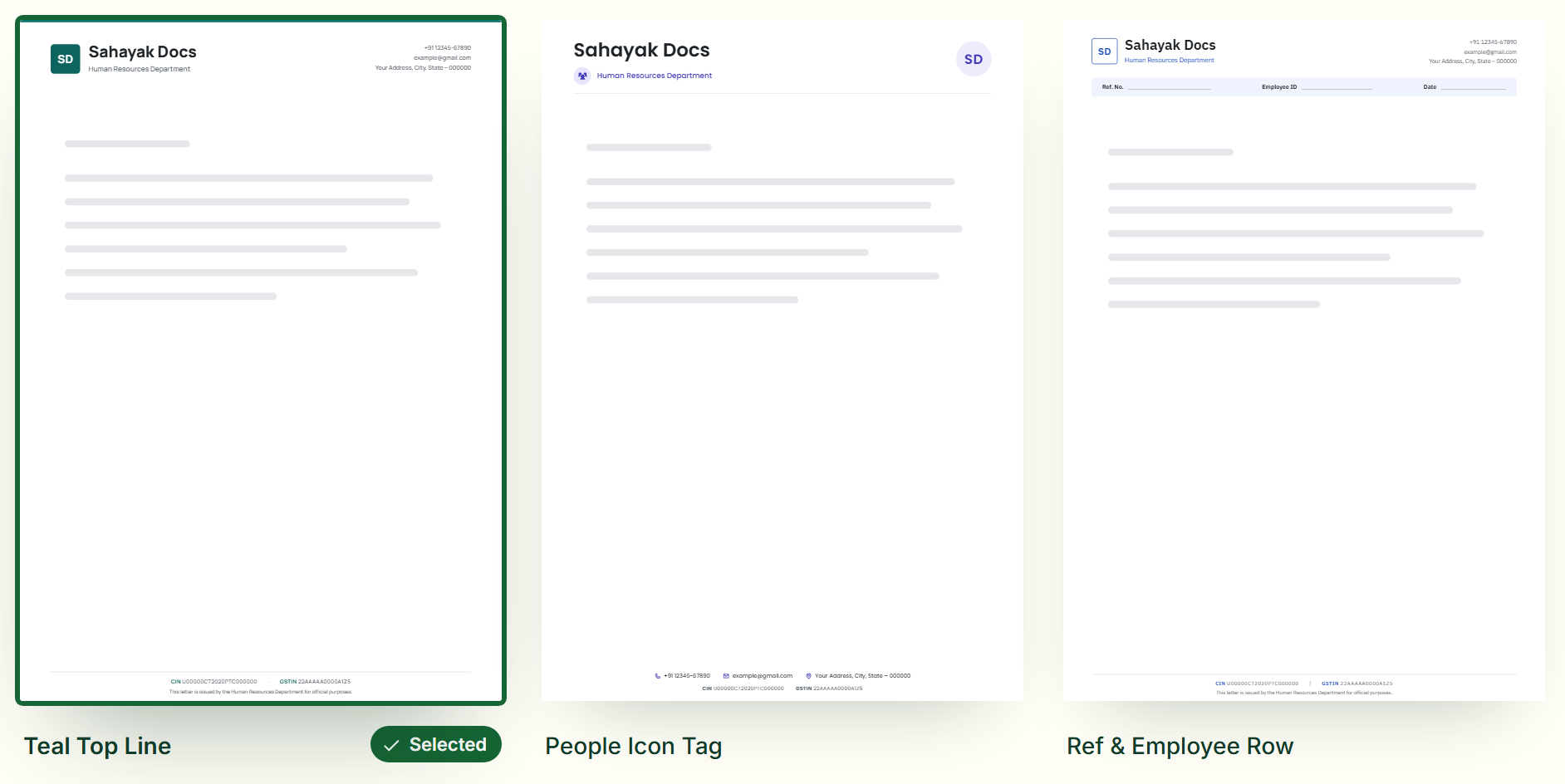
What an experience letter usually says
- Employee’s full name and employee ID
- Designation or designations held, including promotions
- Date of joining and last working day
- A short line on the nature of work or the department
- A line on conduct during employment
- Reference number and date of issue
- Signature of an authorised HR person, with name, designation and the company seal
Other end-of-employment and verification letters
- Relieving letter — confirms the resignation was accepted and duties handed over
- No objection certificate (NOC) — for a visa, passport, higher studies or outside work
- Salary certificate — current pay, often asked for by banks and landlords
- Replies to employment verification requests from background-check agencies
When to issue them
The relieving letter usually goes out on or soon after the last working day, once handover and the full-and-final settlement are done, and the experience letter can go with it. If a former employee asks for a letter years later — for a visa or a loan — issue it on your current letterhead with today’s date and a new reference number, quoting the original dates of employment.
Offer and appointment letters — the ones that start employment — are covered on the HR letterhead page. This page is about the letters at the other end.
Why it reads like a form, not a reference
Notice how deliberately flat the language in an experience letter usually is — dates, designation, department, maybe one line on conduct — compared to the kind of reference letter that praises or criticises someone’s work. That’s not an accident. India has no law written specifically for employment references, so a careless one is judged like any other statement under the ordinary law of defamation, today Section 356 of the Bharatiya Nyaya Sanhita, 2023 (which replaced Section 499 of the Indian Penal Code). A factual, good-faith statement given to someone who genuinely needs it — a new employer, a bank, a visa officer — is defensible; a subjective character assessment, especially a negative one handed to a third party, is the kind of statement an unhappy former employee can contest. That’s why most experience letters stick to what’s provably true — dates, title and “conduct was found satisfactory” — and leave opinions about performance out of the document entirely, even when HR is asked directly for one.
Issue only true details. Background checks verify dates and designations with you directly, and a mismatch reflects on your company, not just the employee.
Why Sahayak Docs
- Free — every design and download, no sign-up, watermark optional
- Ready-made designs for your industry, editable down to every element
- PDF letter pads in A4, A5, A3, Letter and Legal, plus header & footer PNGs
- Works in the browser on computer, tablet and phone
Frequently asked questions
Is an experience letter the same as a relieving letter?
No. A relieving letter confirms the employee has been released from their duties; an experience letter describes their role and tenure. Many companies issue both on the last working day, or combine them into one letter.
Who should sign an experience letter?
An authorised person — usually the HR manager or a director — with their name and designation, and the company seal if you use one.
Can I write the letter in Word on this letterhead?
Yes. Download the header and footer images, place them in the header and footer of your Word document, and type the letter in between. See "Letterhead template for Word" for the full steps.
Can I download a complete PDF instead of Word images?
Yes — see "Letterhead design in PDF" for a ready-to-print or ready-to-email PDF, useful when a former employee needs the letter as a single finished file.
See HR designsor read: How to make a professional letterhead (step by step)