A placement agency sits between employers and job seekers. It writes to client companies with shortlists and agreements, to candidates with interview calls, and — if it supplies contract staff — to sites with deployment letters and monthly invoices. Each of these letters is read by someone deciding whether to trust you, so the letterhead should make your business easy to verify.
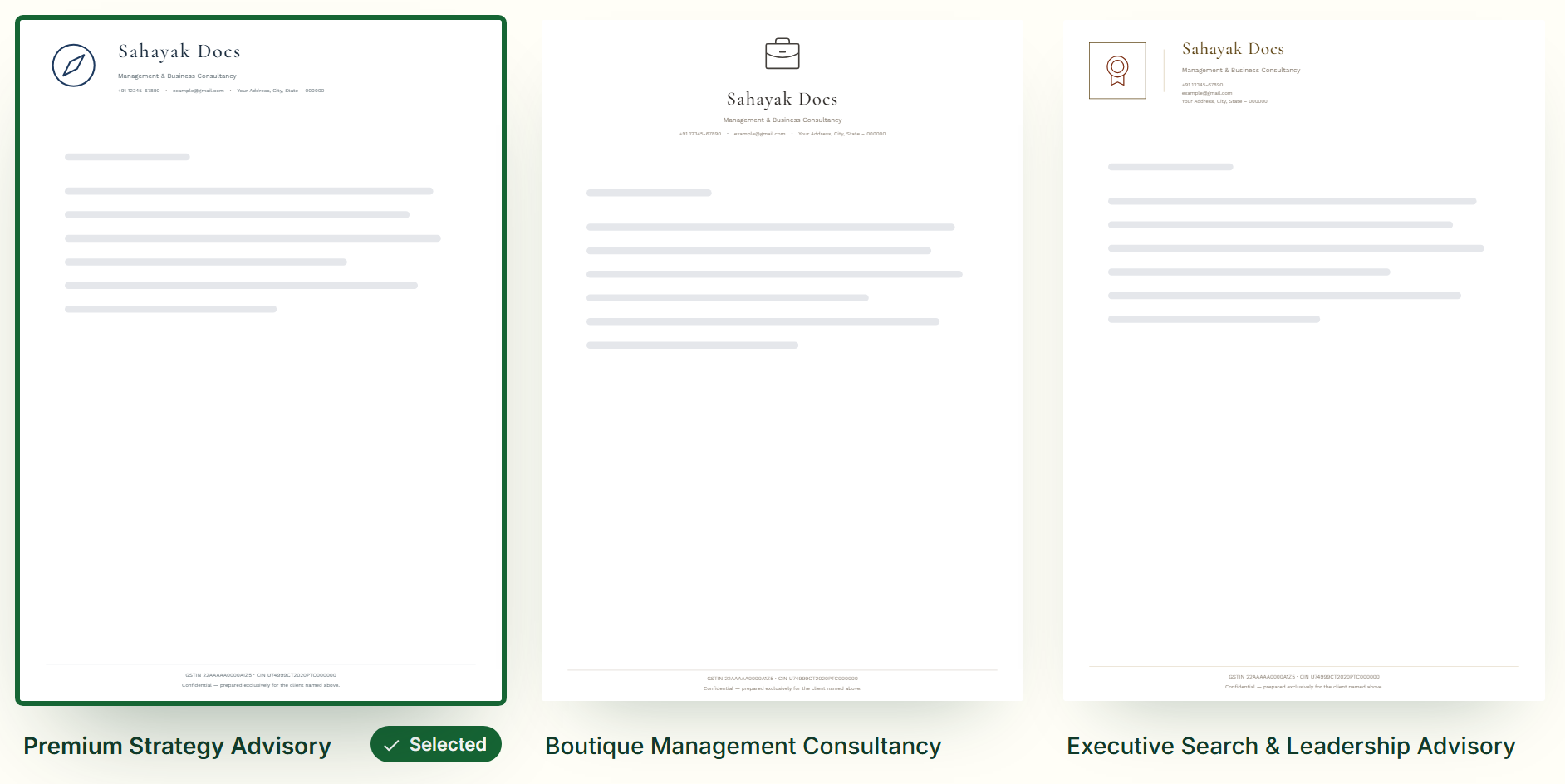
What a placement agency letterhead should show
- Agency name and logo, with the sectors you recruit for in the tagline
- Full office address — a real address matters more here than almost anywhere
- Office phone and email, ideally on your own domain
- GSTIN
- Labour licence number, if you supply contract workers (the rules vary by state and by size)
- EPF and ESIC registration numbers, if deployed staff are on your payroll
Letters you’ll send
- Interview call letters to candidates
- Candidate shortlists and profiles to client companies
- Client service agreements and fee terms
- Invoices for placement fees or manpower supply
- Deployment letters for contract staff
What an interview call letter should say
- Candidate’s name and the post
- The employer’s name, where the client has agreed to share it
- Date, time and full address of the interview
- Documents to bring
- A contact person and phone number for questions
- Whether any fee is charged — if you charge none, say so
Job seekers are rightly wary of recruitment scams and check agencies before they turn up. A clear address, a working office number and your registration details help genuine candidates trust you — and if you charge candidates any fee, state it plainly in writing.
GST on your fee — forward charge, not reverse charge
A placement or manpower agency’s own fee — whatever you charge the client company for a successful hire or for supplying staff — is taxed under GST like most professional services: you, the agency, charge GST on your invoice and pay it yourself under the normal forward-charge mechanism, generally at 18%. Reverse charge, where the client pays the GST directly instead of you, is reserved for a short, specific list of notified categories — for instance, security-personnel services supplied by a non-corporate entity — and recruitment or manpower-supply fees aren’t on that list. It’s a common point of confusion because “manpower supply” sounds like it should sit next to “security services” in the reverse-charge notifications; it doesn’t, so don’t quote a reverse-charge clause on your invoice unless you’re actually supplying one of the categories the law names.
Don’t put a client company’s logo on your own letterhead or interview letters. Name the client in the letter text, and only with their agreement.
Why Sahayak Docs
- Free — every design and download, no sign-up, watermark optional
- Ready-made designs for your industry, editable down to every element
- PDF letter pads in A4, A5, A3, Letter and Legal, plus header & footer PNGs
- Works in the browser on computer, tablet and phone
Frequently asked questions
Do placement agencies need a licence?
It depends on what you do and where. Agencies that supply contract workers generally need a labour licence, some states require recruitment agencies to register, and recruiting for jobs abroad needs a recruiting agent licence from the Ministry of External Affairs — check the current rules for your work.
Can we issue offer letters to candidates on our letterhead?
Offer letters should come from the employer, on the employer’s letterhead. Your agency letterhead is for your own letters — interview calls, shortlists, agreements and invoices.
See consultancy designsor read: How to make a professional letterhead (step by step)