A construction company’s letters are read by clients, project consultants, banks and government departments, and many become part of the contract record — tender submissions, letters about extra items or delays, and orders to subcontractors. The letterhead has to look as established as the company: registered details exact, the head office clear, and a site office address where the work is happening.
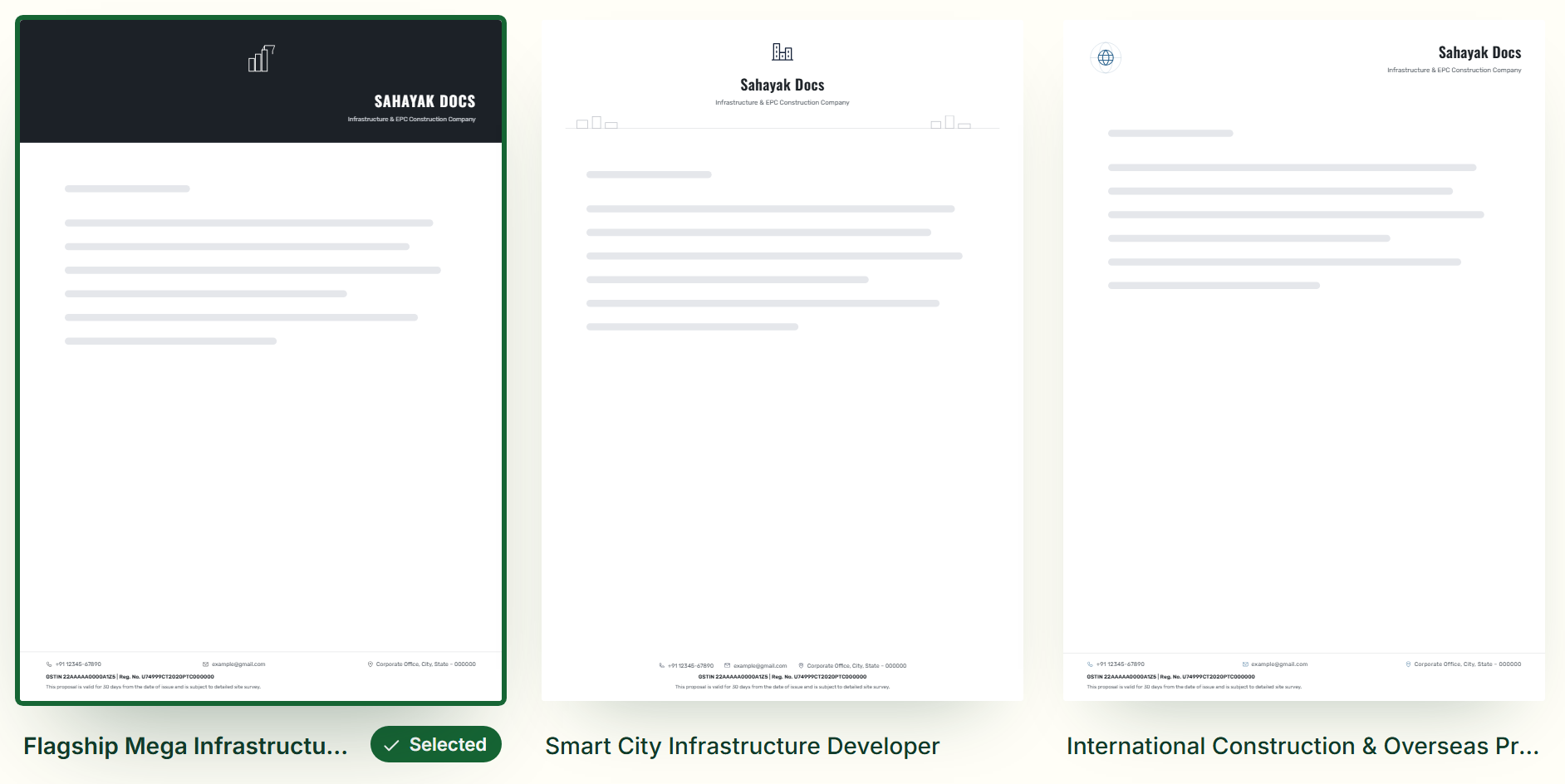
What a construction company letterhead should show
- Company name and logo, with your work areas in the tagline — buildings, roads, bridges, industrial projects
- Registered or head office address, and the site office for project letters
- CIN for a company, and GSTIN
- Contractor registrations or enlistments you hold with government departments, if any
- Certifications such as ISO 9001, ISO 14001 or ISO 45001 — only those you currently hold
- A contracts or projects contact, and the authorised signatory in the footer
Letters a construction company sends
- Covering letters for tender submissions, technical and financial bids
- Letters to clients and consultants about drawings, extra items, delays or extensions of time
- Orders and letters to subcontractors and suppliers
- Running account (RA) bills and final bills
- Site instructions and safety notices
The BOCW cess sits behind every RA bill
A construction contract usually carries more than the contract value on paper. The Building and Other Construction Workers’ Welfare Cess Act, 1996 charges a cess of 1% of the cost of construction, which the employer is required to pay to the state’s BOCW Welfare Board (Delhi’s labour department sets out the obligation at this rate). On government and PSU contracts it’s usually deducted at source from each running account bill rather than invoiced separately, so a contractor who hasn’t budgeted for it can find a bill a full percentage point short of what the measurement sheet shows — worth a line in the RA bill’s covering letter, not just a surprise for the accounts team.
Head office and site office letters
Many firms keep one letterhead for the head office and a project version with the site office address and the project name in the footer. Letters from site then reach the right people, while tenders and contract letters still go out on the head office letterhead with the company’s full registered details.
Tender documents usually ask for the bid letter on the bidder’s letterhead, signed by an authorised signatory. Keep a letter pad with your registered details ready, so the covering letter is never the last-minute item.
Why Sahayak Docs
- Free — every design and download, no sign-up, watermark optional
- Ready-made designs for your industry, editable down to every element
- PDF letter pads in A4, A5, A3, Letter and Legal, plus header & footer PNGs
- Works in the browser on computer, tablet and phone
Frequently asked questions
Is this different from a civil contractor’s letterhead?
Mostly in scale. A construction company usually shows its CIN, head office and project sites, while an individual civil contractor leads with their own name and registration class — each has its own set of designs built around that difference.
Can I add the site office address for a particular project?
Yes. Put the head office in the address field and the site office, with the project name, in the footer note — then download a letter pad for that site.
Which size is best for tender documents?
A4 is standard for tender submissions in India. Check the tender document too — some ask for every page to be signed and stamped, which needs a clear margin at the foot.
See construction company designsor read: How to make a professional letterhead (step by step)