An engineering firm’s letterhead carries proposals, design reports and the cover letters that go out with every set of drawings. Clients, architects and contractors keep these for years and go back to them whenever something on site is questioned, so the letterhead should make it obvious who issued a document, in which discipline, and how to reach the engineer responsible.
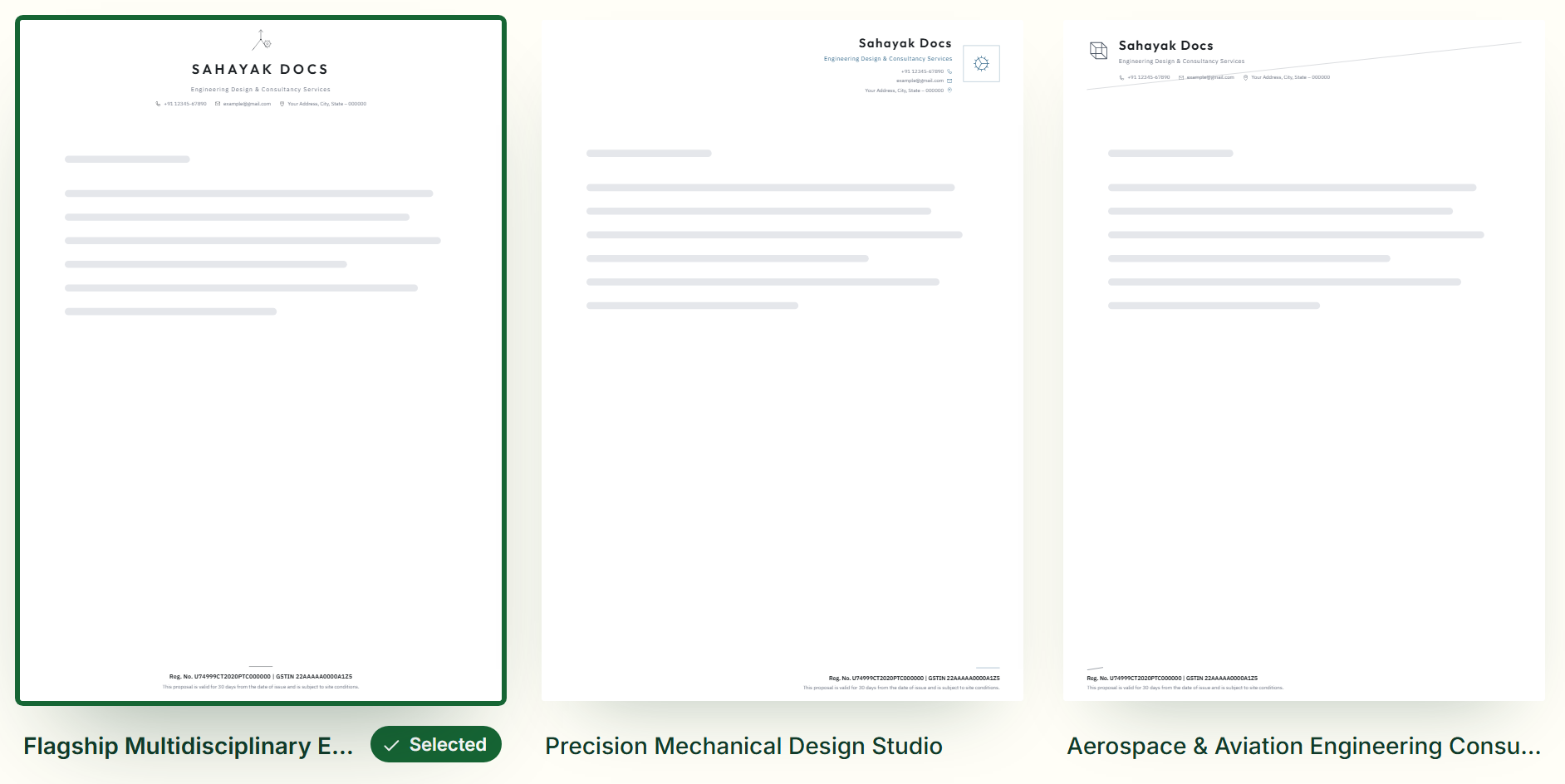
What an engineering letterhead should show
- Firm name and logo, with your disciplines in the tagline — civil, structural, mechanical, electrical, HVAC or piping
- Principal engineer’s name and qualification (for example B.E. Civil, M.Tech Structures)
- Licence or registration numbers where they apply — for example as a structural engineer licensed by your city’s building authority, where it issues such licences
- Membership of professional bodies such as the Institution of Engineers (India), if you hold it
- Office address, phone and an email for technical queries
- GSTIN, for your fee invoices
Documents engineering firms send on letterhead
- Design proposals with the technical scope and fee
- Drawing transmittals listing each drawing number and revision
- Site inspection and progress reports
- Cover letters for design calculations and structural stability certificates
- Replies to technical queries from clients and contractors
Drawing transmittals
A transmittal is the cover sheet that goes with a set of drawings: the project name, each drawing number with its revision, the purpose of issue (for approval, for construction or for information) and who received it. Printed on your letterhead and dated, it becomes the record that settles later questions about which revision the site was working from.
What a Chartered Engineer’s certificate is actually for
Many engineering firms also issue Chartered Engineer certificates, and these do specific, unglamorous jobs that rarely make it into a tagline. Indian customs asks for one before it will clear imported used or second-hand machinery, and banks and insurers lean on the same certificate to value plant and equipment for a loan or a claim (Intertek’s own explainer for exporters sets out both uses). If your firm is equipped to issue them, naming “Chartered Engineer certification” as its own line in the services list tells a prospective client something your registration number alone doesn’t.
Use the footer note for a “Doc. No. / Rev.” line, so every page of a long report carries its reference even after the pages are separated.
Why Sahayak Docs
- Free — every design and download, no sign-up, watermark optional
- Ready-made designs for your industry, editable down to every element
- PDF letter pads in A4, A5, A3, Letter and Legal, plus header & footer PNGs
- Works in the browser on computer, tablet and phone
Frequently asked questions
Can I list several engineering disciplines on the letterhead?
Yes. Put them in the tagline or the services list — for example “Structural, MEP and Project Management” — and keep the detailed scope of each service for your proposals.
Is this suitable for an engineering department inside a company?
Yes. Use “Engineering Department” in the tagline with the company’s registered details; the same designs work for in-house engineering teams and independent firms.
Which paper size suits technical reports?
A4 is the standard for reports and letters in India. Drawings are usually printed separately on larger sheets; the letterhead goes on the transmittal and the report pages.
See engineering letterhead designsor read: How to make a professional letterhead (step by step)