Textile and garment businesses work in long chains — spinning, weaving, processing, stitching — and goods often move between units for job work before the finished order ships to a buyer or exporter. Every step creates paperwork: quotations per metre or per piece, sample approvals, order acknowledgements and challans. A clear letterhead keeps each document traceable to the right unit.
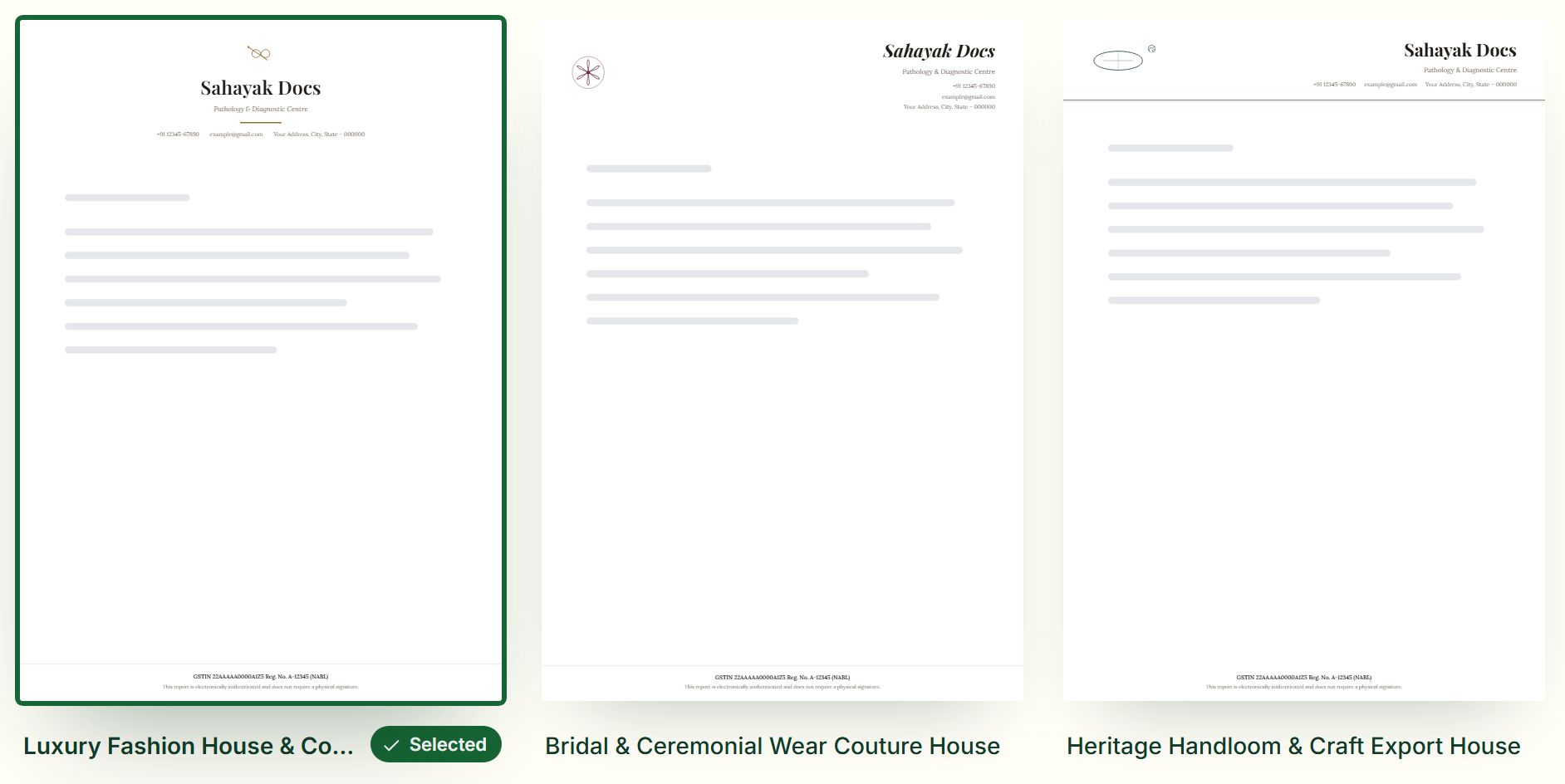
What a textile or garment unit’s letterhead should show
- Unit name and logo, with what you make — grey fabric, dyed and printed fabric, knitwear or readymade garments
- Mill or factory address, and the sales office if it is in a different market
- GSTIN and Udyam registration number
- IEC (Importer-Exporter Code), if you export
- Main products and processes in the services list
- Partner’s or proprietor’s name and mobile number in the footer
Documents textile businesses send
- Quotations per metre for fabric, or per piece for garments
- Sample and lab-dip approval letters
- Acknowledgements of buyers’ purchase orders, with delivery dates
- Job-work letters, and the challans that go with goods sent for job work
- Letters to agents and buying houses
Job work and challans
Sending fabric out for dyeing, printing or stitching is everyday work in textiles. Under GST, goods sent to a job worker usually travel with a delivery challan rather than an invoice; the rules on what it must contain and when the goods must come back are detailed, so confirm the format with your CA. The letterhead gives every challan and job-work letter your unit’s details.
Dyeing and processing units need a PCB consent too
A weaving or stitching unit with no wet-processing can often get by on routine registrations, but the moment bleaching, dyeing, printing or colouring enters the process, the unit falls into the Pollution Control Board’s “Red” category — and both Consent to Establish and Consent to Operate become mandatory before it can legally run (a compliance rundown lists textile dyeing and bleaching among the Red-category examples). It’s a different clearance from the GST and Udyam registrations already covered, and one that’s easy for a growing unit to discover only after adding a dyeing line, not before.
Write quantities in the unit the buyer uses — metres, kilograms or pieces — and repeat it in the order acknowledgement. Many disputes over textile orders start with a mismatch in units or fabric width.
Why Sahayak Docs
- Free — every design and download, no sign-up, watermark optional
- Ready-made designs for your industry, editable down to every element
- PDF letter pads in A4, A5, A3, Letter and Legal, plus header & footer PNGs
- Works in the browser on computer, tablet and phone
Frequently asked questions
Can I use these designs for a garment export unit?
Yes. Add your IEC in the registration number field or the footer note, and use the letter pad for buyer correspondence and order acknowledgements; every design takes your own name and logo.
Is there a separate page for clothing shops?
Yes — shops selling clothes to customers have their own page. This one is for mills, weaving units and garment factories that make and supply in bulk.
See textile & garment designsor read: How to make a professional letterhead (step by step)