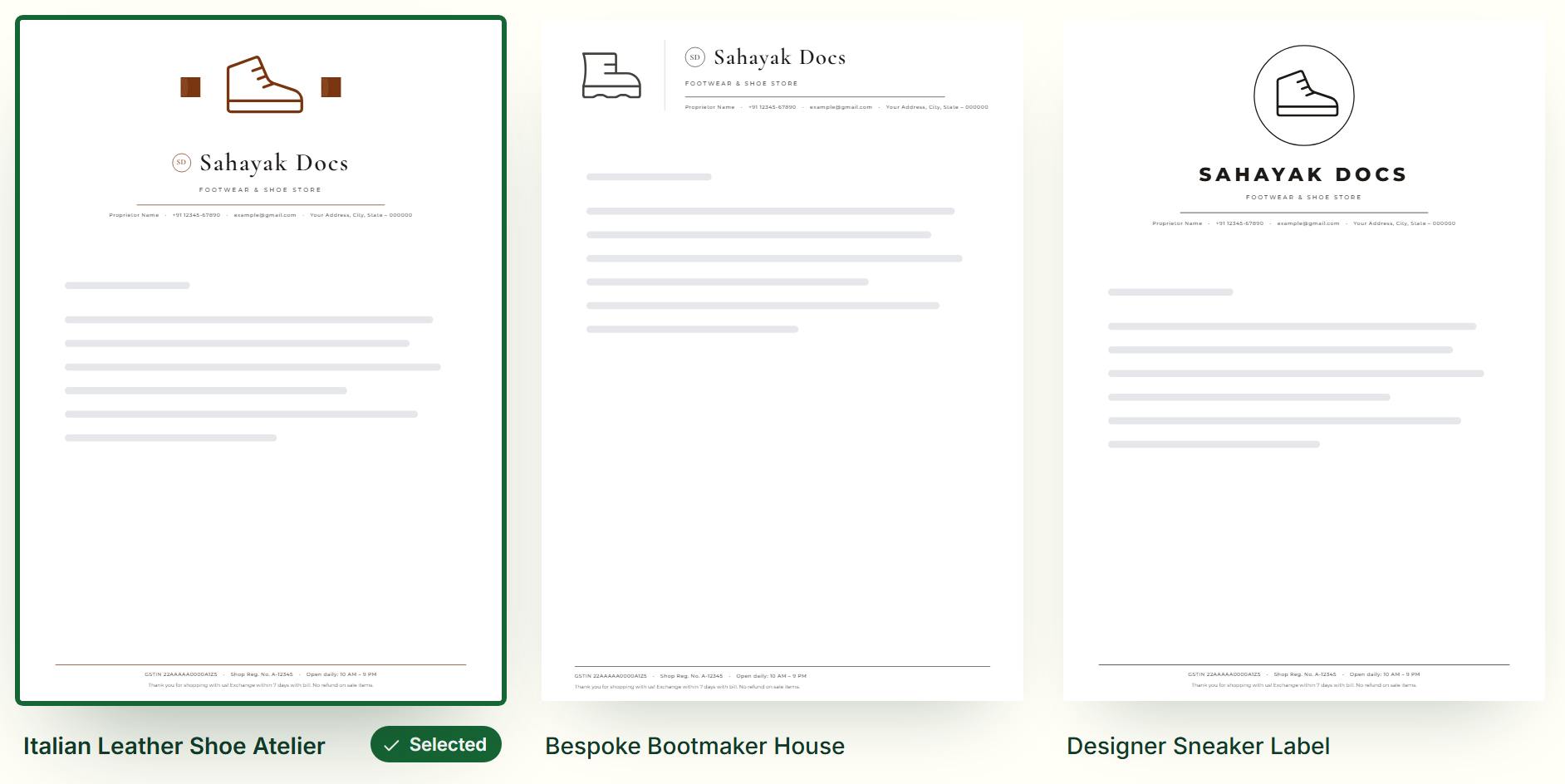
A footwear bill needs more than a price — size, brand and an exchange window matter to the customer, so the letter pad leaves room for them next to your shop details.
What to include
- Store name, logo and the brands you stock
- GSTIN for invoices
- Address, phone and store timings
- Space for invoice number, size and item details
GST on footwear also moved to a price-based slab
From 22 September 2025, footwear priced up to ₹2,500 a pair is taxed at 5%, and anything above that at 18% — there’s no 12% slab in between any more. A store carrying both an everyday line and a premium branded shelf now needs to check each pair’s price against ₹2,500 before billing it, rather than applying one GST rate across the whole invoice.
Where it is used
- Retail invoices and bills
- Exchange and warranty slips
- Letters to footwear brands and distributors
Why Sahayak Docs
- Free — every design and download, no sign-up, watermark optional
- Ready-made designs for your industry, editable down to every element
- PDF letter pads in A4, A5, A3, Letter and Legal, plus header & footer PNGs
- Works in the browser on computer, tablet and phone
Frequently asked questions
Can I add the brands I stock to the letterhead?
Yes — mention them in the tagline or services field, and the design shows them in the header.
What exchange window should I print on the slip?
Most footwear stores allow 7–15 days for an unworn pair with the box and tags, often shorter for sale stock. Printing the exact number of days and condition on the slip avoids a dispute later, rather than relying on a verbal rule.
Should a manufacturing defect be handled differently from a size exchange?
Yes — a manufacturing defect is usually the brand’s warranty, not the shop’s return policy. Keep separate notes or a separate slip for each, so a customer can’t be told to approach the brand when the shop itself owes the exchange, or the other way round.
See shoe store letterhead designsor read: How to make a professional letterhead (step by step)