AYUSH practitioners — vaidyas, homoeopaths, hakims, Siddha and naturopathy doctors — write prescriptions, treatment plans and diet advice as often as any clinic, and patients carry those pages to the pharmacy and back for follow-ups. A letterhead that states your system of medicine, qualification and registration number tells patients and chemists exactly who you are.
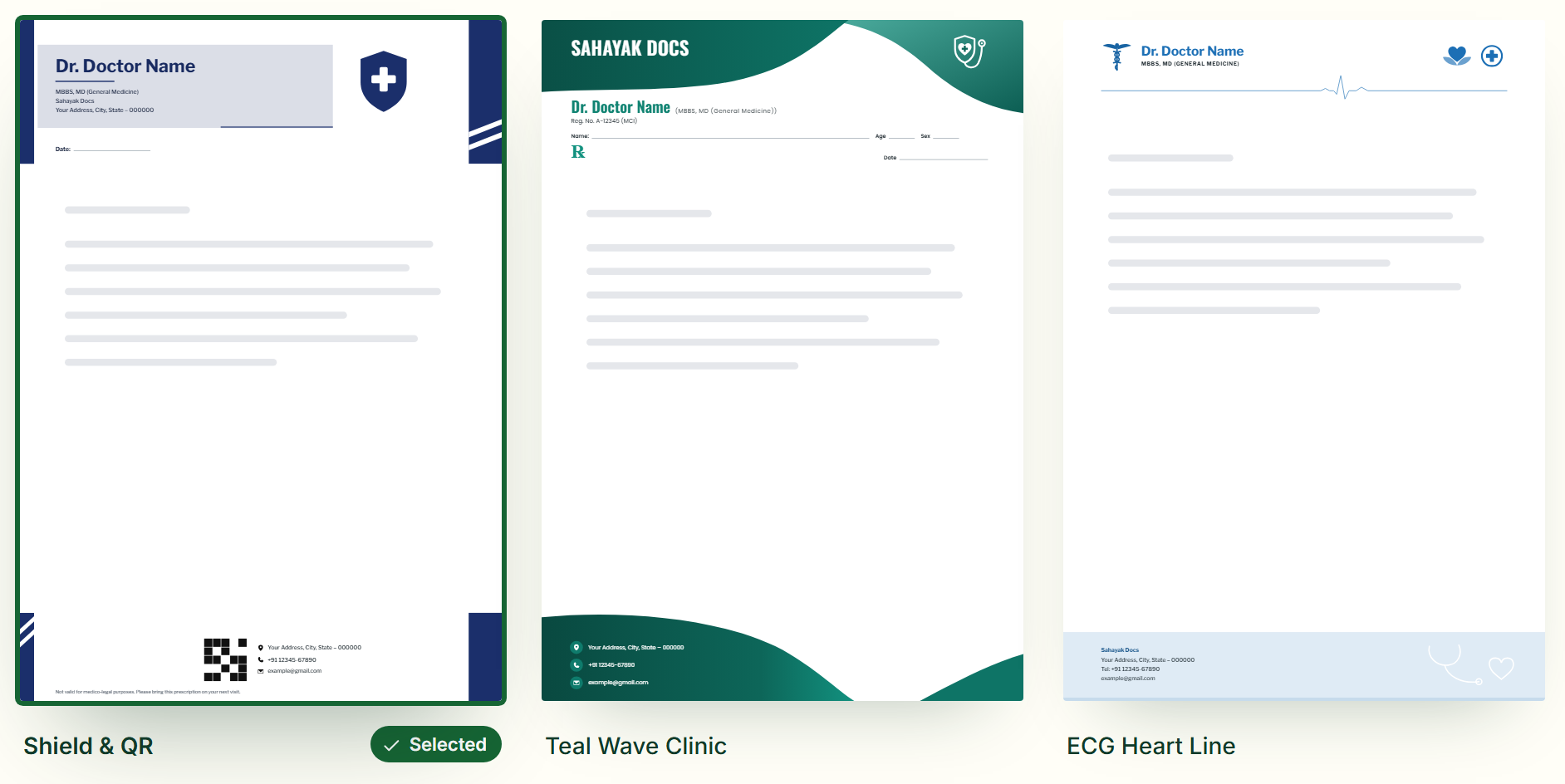
What an AYUSH clinic letterhead should show
- Practitioner’s name with qualification — BAMS, BHMS, BUMS, BSMS, BNYS, or a postgraduate degree
- Registration number with your state board or council for Indian medicine or homoeopathy
- Your system of medicine — Ayurveda, Homoeopathy, Unani, Siddha or Naturopathy — in the tagline
- Clinic name, address and phone
- Consulting timings, and therapy days if you offer Panchakarma or other treatments
- Space for patient details and the prescription
Where it’s used
- Prescriptions
- Treatment and Panchakarma plans
- Diet and lifestyle advice sheets
- Referral letters and follow-up notes
Many practitioners use A5 pads for everyday prescriptions and A4 for treatment plans and diet sheets. Both sizes download from the same design.
The councils that register you have been renamed
Ayurveda, Siddha, Unani and Sowa-Rigpa practitioners used to register under the Central Council of Indian Medicine (CCIM), set up by the Indian Medicine Central Council Act, 1970. That Act was repealed with effect from 11 June 2021, and CCIM was dissolved the same day — the National Commission for Indian System of Medicine (NCISM), created by the National Commission for Indian System of Medicine Act, 2020, took over its functions. Homoeopathy went through the same change: the Central Council of Homoeopathy (CCH) was dissolved when the National Commission for Homoeopathy Act, 2020 came into force on 5 July 2021, and the National Commission for Homoeopathy (NCH) replaced it. What hasn’t changed is where you actually register — that is still your state board, and the number it issues you is what belongs in the Reg. No. field. If an old letterhead or visiting card still reads “(CCIM)” or “(CCH)” after your qualification, it’s naming a body that no longer exists; use your state board’s name instead, or just the number on its own.
Keep cure claims off the letterhead
It’s tempting to print “cure for diabetes” or “guaranteed results” under your name. Don’t: the Drugs and Magic Remedies (Objectionable Advertisements) Act, 1954 bans advertising cures for a list of diseases and conditions, and professional codes of conduct generally restrict self-promotion. List your system of medicine and services plainly instead.
Put your registration number in the header next to your qualification. Chemists look for it, and it shows at a glance that the prescription comes from a registered practitioner.
Why Sahayak Docs
- Free — every design and download, no sign-up, watermark optional
- Ready-made designs for your industry, editable down to every element
- PDF letter pads in A4, A5, A3, Letter and Legal, plus header & footer PNGs
- Works in the browser on computer, tablet and phone
Frequently asked questions
Can I use the doctor designs for an Ayurvedic or homeopathic clinic?
Yes. Type your name, AYUSH qualification and registration number into the doctor details — the designs print whatever you enter, and many include a prescription area.
Where should the registration number go?
Next to or just below your qualification in the header is most common, so it is read together with your name.
Can two practitioners share one pad?
Yes — the doctor details section has fields for a main and a second practitioner, each with their own qualification.
See doctor & clinic designsor read: Letterhead and prescription pad design for doctors and clinics