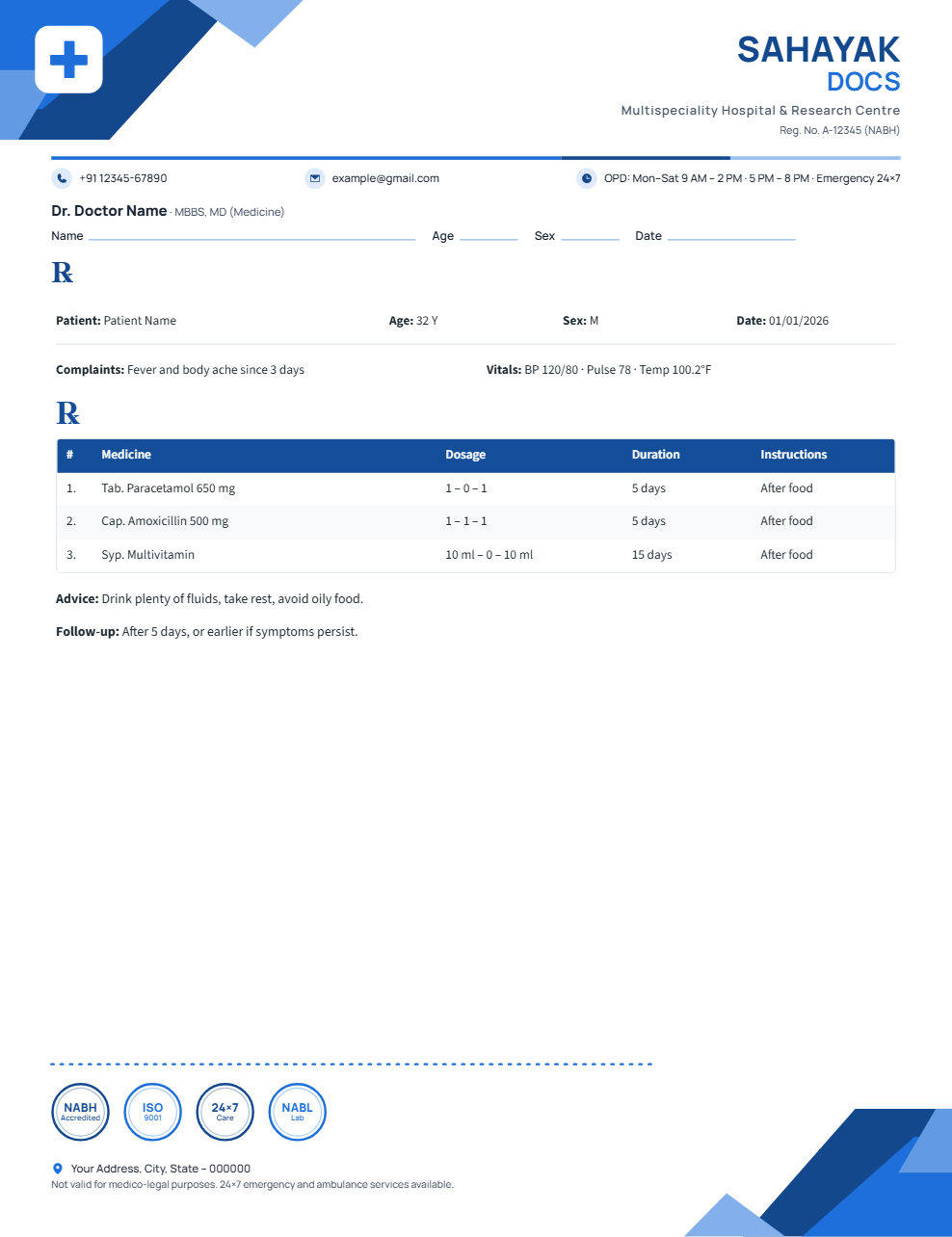
For a clinic, the letterhead appears on prescriptions, certificates, referral letters and reports. Patients keep these documents, pharmacists read them and other doctors rely on them — so clarity matters more than decoration.
What to show
- Doctor’s name with qualifications and specialisation
- Medical council registration number
- Clinic name, address and phone number
- Consultation timings, if you want patients to see them
- Clinic logo, if you have one
Keep the writing area generous
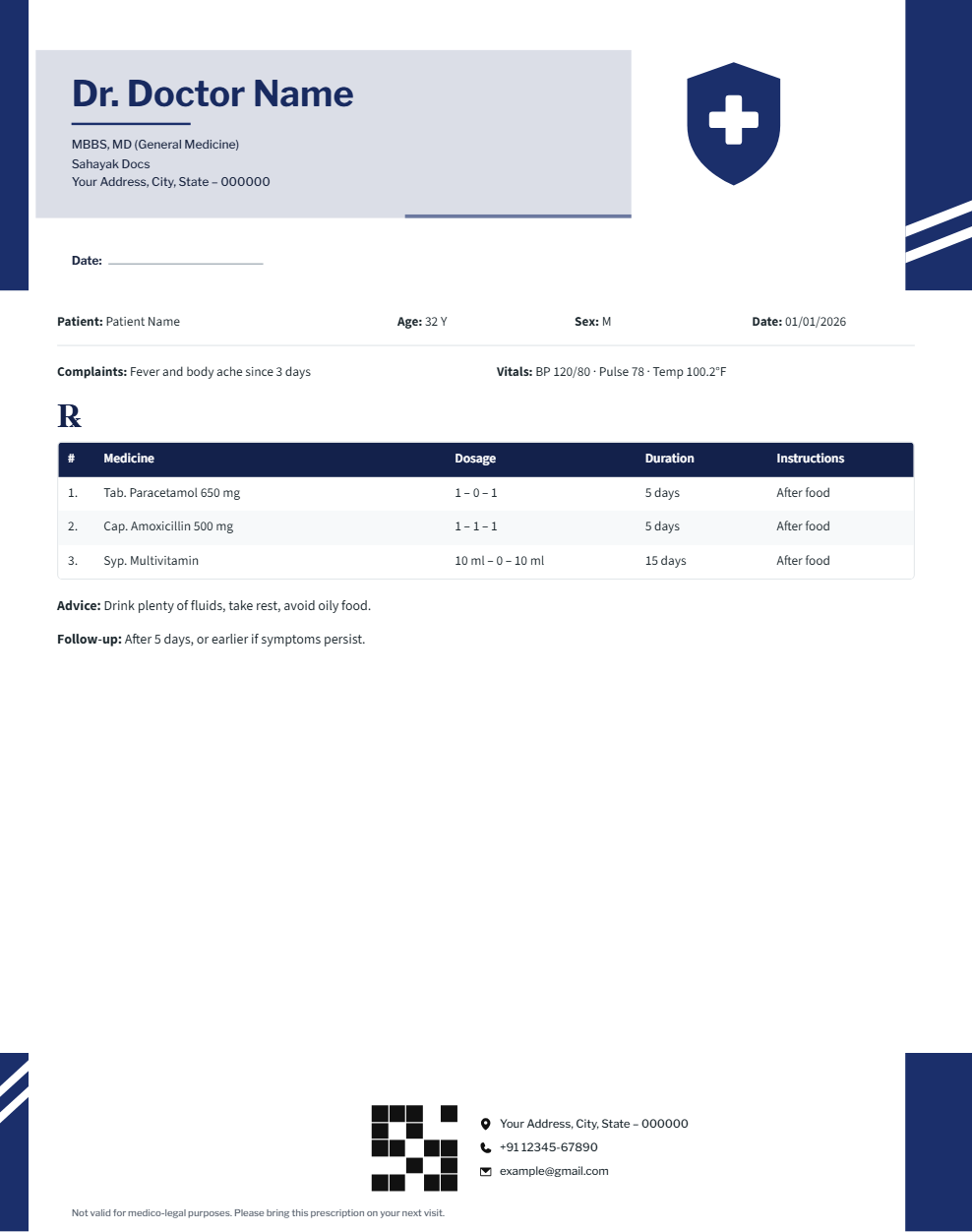
Prescription pads work best with a compact header and plenty of blank space. A5 is a popular size for prescription pads because it is easy to hand over and file, while A4 suits certificates and letters.
Footer ideas
- A signature line with the doctor’s name repeated
- Emergency contact number
- A short note, such as “Not valid for medico-legal purposes” where appropriate
Readability first
Choose calm colours and make sure registration numbers and phone numbers are printed at a readable size. Pharmacists and patients should never have to squint at the details.
Pick “Doctor / Clinic” as your industry in Sahayak Docs to choose from its ready-made designs, then adjust anything in Create your own.
Frequently asked questions
Is a doctor legally required to print a registration number on prescriptions?
Yes — under Indian Medical Council regulations, every prescription should carry the treating doctor’s medical council registration number. Print it clearly rather than in small, easy-to-miss text.
Should a prescription pad be A4 or A5?
A5 is the more common choice for clinics because it is easy to hand over and file, but A4 works too — especially if you reuse the same design for certificates and referral letters. Both sizes are available from the same design in Sahayak Docs.
Can I add a “not valid for medico-legal purposes” note?
Yes — it is a common, legitimate footer note for routine prescriptions (see the example above). Add it once in the footer and it appears on every page you print.